The Brief

made by Emergent

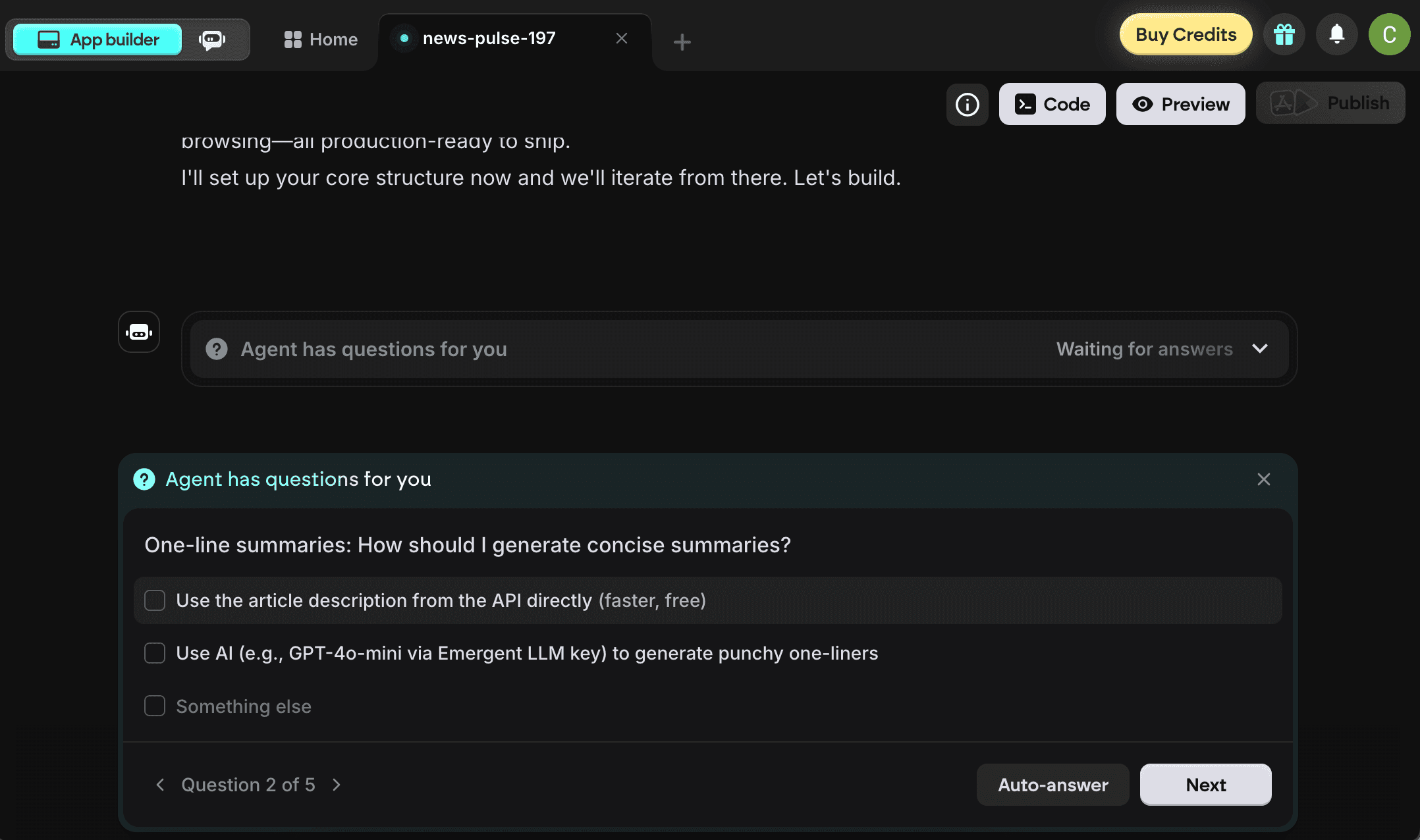
Agent asks questions after initial prompt

Emergent approached the build differently than any other builder in this evaluation.Emergent approached the build differently than any other builder in this evaluation. Rather than generating immediately from the initial prompt, it paused to ask five clarifying questions — covering how summaries should be generated, how articles should be viewed, whether a user account system was needed, the preferred design direction, and what news API to connect to. It was the most collaborative experience of the four builders, feeling less like issuing commands to an agent and more like scoping a project with one. The quality of the questions reflected a builder that thinks before it builds — and the output reflected that. The tradeoff on the free tier however is significant: answering those questions consumed tokens before a single screen was generated, leaving no budget for iteration after the initial build. The Emergent evaluation is the shortest of the four not because the builder underperformed, but because the free tier ran out before the process could go further. What it produced from one prompt and two answered questions was closer to the target feature set than any other first output in this evaluation.

Screen 1
1/5

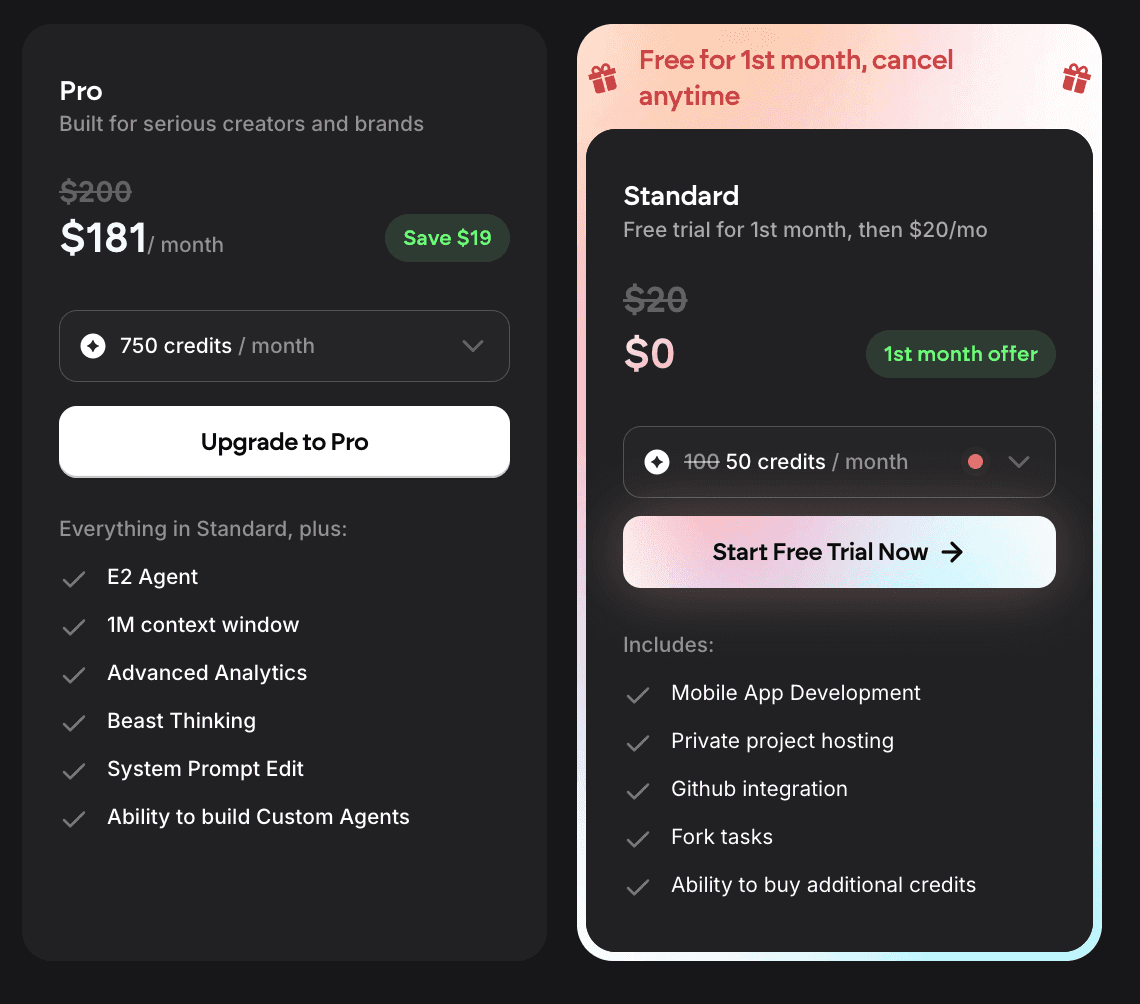
Emergent pricing

Dimension
Rating
Assessment
01
Output Quality
With only the initial prompt and some questions, it produced a full prototype
02
Ease of Use
Simple and straight forward, the questions were helpful in helping to figure out more of what the user is looking to build
03
Iteration Handling
Didn't have a chance to write any iterations
04
Free Tier Limits
Only gets a fixed set of tokens to use with no additional free refill

Key takeaways

To make the most using the free tier on the Emergent AI builder, it is important to be detail heavy with the initial prompt. Clearly defining the application's design system, functionality, user experience, and feature requirements upfront reduced clarification requests and utilizes the limited toke usage to be focused on product refinement rather than requirement gathering. This highlighted the importance of treating the initial prompt as a product requirements document, where greater specificity led to more accurate and efficient outcomes.